Skip to content
Summarize with
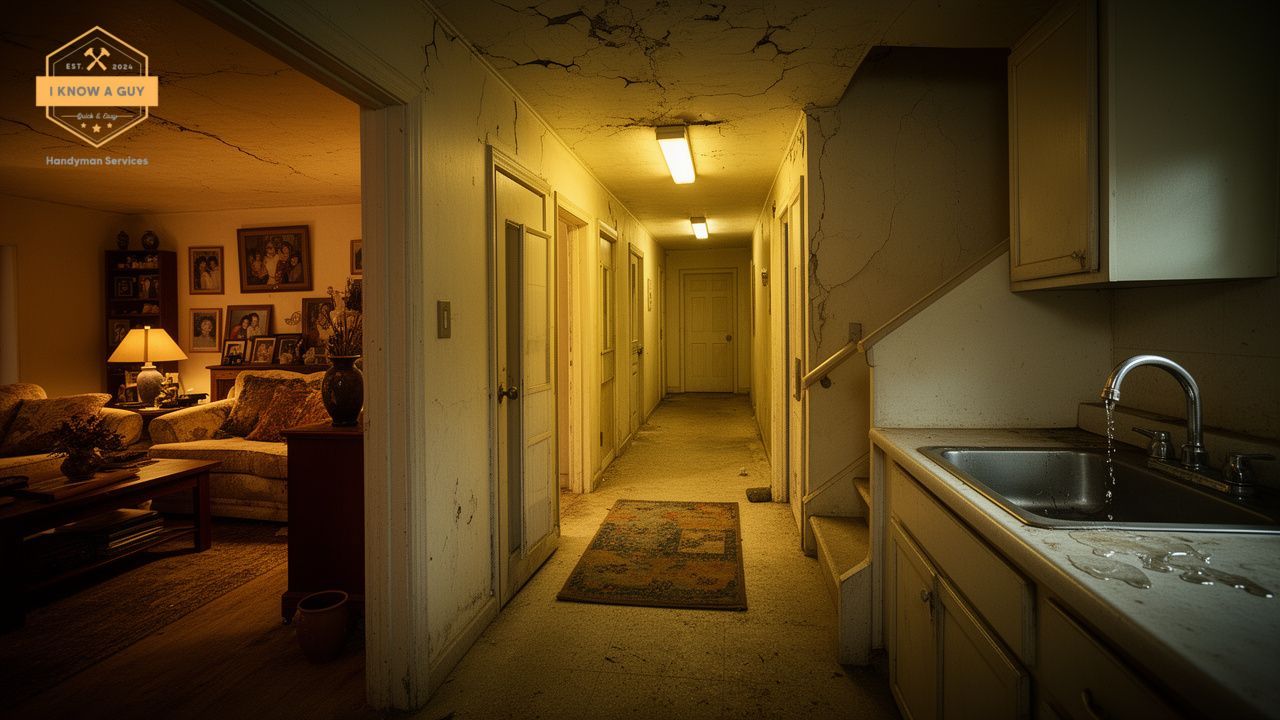
Neglecting minor home repairs often leads to catastrophic structural damage and significant financial loss over time. The most urgent issues requiring immediate attention include water leaks, drywall cracks, sticking doors, and compromised window seals. Addressing these problems when they first appear prevents them from escalating into expensive restoration projects that can cost ten times more than the initial fix.
Homeowners who consistently follow a house repair checklist protect their property value and ensure the safety of everyone inside. Maintaining a home requires a proactive approach rather than a reactive one. Expert observations from I Know A Guy Handyman Services LLC suggest that a small crack in the drywall or a slightly misaligned door often signals deeper issues, such as foundation shifts or moisture intrusion. This guide provides the necessary knowledge to identify home repair warning signs and understand which minor home repairs deserve priority.
Water Damage and Plumbing Issues
Water is the most destructive force in a residential property. A small drip under a sink or a faint stain on the ceiling indicates a failure in the plumbing or roofing system. According to data from Forbes Home, even a minor leak can waste up to 10,000 gallons of water per year in a single household. This waste increases utility bills and creates an environment where mold thrives.
When water remains in contact with wood, drywall, or flooring, it weakens the material. Rotting floor joists or molded wall studs require extensive demolition to fix. Homeowners should regularly inspect areas around toilets, dishwashers, and water heaters for any signs of moisture. Soft spots in the floor near appliances are a major red flag that the subfloor is absorbing water.
Bonus Tip: Place a dry paper towel under sink pipe joints and check it after 24 hours. If the towel is damp or wrinkled, a slow leak exists that might not be visible to the naked eye.
Structural Integrity and Drywall Repair
Drywall does more than provide a smooth surface for paint; it acts as a barrier against fire and helps insulate the home. Small cracks above door frames or windows often point to the house settling. While some settling is normal, large or recurring cracks suggest foundation problems that require professional evaluation.
Delaying drywall repair allows pests to enter the wall cavities and reduces the building’s energy efficiency. Holes in the wall also expose the home to moisture. In humid climates, unsealed drywall absorbs water from the air, which leads to sagging and eventual collapse. Patching small holes and sealing cracks as they appear keeps the interior environment controlled and the structure sound.
Door Repair and Alignment
A door that sticks or fails to latch properly is more than a nuisance; it is a security risk and a sign of structural movement. When a door is out of alignment, it puts unnecessary stress on the hinges and the frame. This stress eventually pulls the frame away from the wall studs, leading to much larger repairs.
Door repair often involves tightening loose hinges or planing down edges that rub against the jamb. However, if the door is sticking because the house has shifted, a professional needs to assess the situation. Properly functioning doors also ensure that fire ratings are maintained, as a door that cannot close fully will not stop the spread of smoke or flames during an emergency.
Window Repair and Energy Efficiency
Windows are primary points of heat loss in the winter and heat gain in the summer. Damaged seals in double-pane windows result in “fogging” between the glass, which means the insulating gas has escaped. According to information provided by the Department of Energy, heat gain and heat loss through windows are responsible for about 25% to 30% of residential heating and cooling energy use.
Window repair should include checking for rot in wooden frames and ensuring that the caulking around the exterior remains intact. Cracked glass or broken latches compromise the security of the home and allow moisture to seep into the wall structure. Replacing old weatherstripping is an easy way to lower energy costs and improve comfort.
Floor Repair and Safety Hazards
Trip hazards are a leading cause of injuries in the home. Floor repair is necessary when floorboards become loose, tiles crack, or carpets bulge. A loose floorboard is often a sign that fasteners have failed or the subfloor has warped due to moisture.
In bathrooms and kitchens, cracked grout or loose tiles allow water to reach the wooden subfloor. Once the wood underneath begins to rot, the entire floor system loses its strength. Addressing these minor home repairs quickly prevents the need for a full floor replacement.
Home Maintenance Frequency Comparison
The following table outlines how often certain areas of the home should be inspected to avoid major failures.
| Feature | Inspection Frequency | Common Warning Signs |
| Plumbing Fixtures | Monthly | Slow drains, dampness under cabinets, moldy smell |
| Exterior Caulking | Bi-Annually | Cracks, peeling, and gaps between the window and siding |
| Drywall and Ceilings | Quarterly | New cracks, yellow staining, and bubbling paint |
| Doors and Hinges | Annually | Squeaking, sticking, and difficulty locking |
| Flooring | Monthly | Popping sounds, loose tiles, uneven surfaces |
Things to Consider Before Making a Decision
Before starting any repair, homeowners must evaluate their own skill level and the tools required. Some tasks look simple but involve hidden risks. For example, a simple drywall repair might reveal electrical wiring that was installed incorrectly.
Homeowners should also consider the age of the home. Older houses may contain lead paint or asbestos, which require specialized handling during any renovation or repair. It is equally important to calculate the “total cost of neglect.” While a handyman service might cost money upfront, the price of replacing an entire wall or floor system due to a neglected leak is significantly higher.
Common Questions About Home Repairs
Can I ignore a small crack in my foundation or drywall?
Small hairline cracks in drywall are often cosmetic, but any crack wider than a quarter inch or those that grow quickly should never be ignored. Foundation cracks that allow water to enter a basement or crawlspace require immediate professional attention to prevent structural failure.
Why do my doors only stick during certain seasons?
Wood expands and contracts based on humidity levels. Doors often stick in the summer when the air is moist and shrink in the winter when the air is dry. If the sticking is severe, it indicates the door was fitted too tightly, or the home’s moisture control system is failing.
Is it worth repairing an old window, or should I replace it?
If the frame is solid and only the glass or the seal is broken, repair is often the most cost-effective choice. However, if the frame is rotting or the window is a single-pane model, replacing it with an energy-efficient version will save more money on utility bills in the long run.
Proactive Home Maintenance Tips
Maintaining a house repair checklist helps prioritize essential tasks. One of the best home maintenance tips is to walk the perimeter of the property once a month, looking for changes in the siding, gaps in the window frames, or areas where the ground is settling near the foundation. In addition to these physical inspections, homeowners should plan for the financial aspects of upkeep.
Market data from Angi suggests that homeowners can expect to pay about 1% of their home’s value annually for maintenance. Staying ahead of this spending prevents the “snowball effect,” where one small problem leads to several larger ones. For instance, a clogged gutter leads to water overflowing, which then rots the fascia board and eventually leaks into the attic drywall.
Bonus Tip: Use a flashlight to inspect the attic and crawlspace during a heavy rainstorm. This is the easiest way to find active leaks before they cause visible damage to the living areas.
Identifying Home Repair Warning Signs
Understanding the difference between a cosmetic flaw and a structural warning sign is essential. A stain on the ceiling is never just a stain; it is a map of a leak. A musty odor in a room usually indicates hidden mold. These signs are the home’s way of communicating that a system is failing. Professionals at I Know A Guy Handyman Services LLC recommend keeping a log of when repairs are made to track the health of the home over time.
Frequently Asked Questions
What are the most common minor home repairs?
The most frequent tasks include fixing leaky faucets, patching small holes in drywall, replacing door hardware, and re-caulking bathtubs or showers. These tasks are essential for preventing long-term moisture damage.
How do I know if a repair requires a professional?
If the repair involves the main electrical panel, structural load-bearing walls, or complex gas plumbing, hire a professional. If a task requires specialized tools that you do not own or know how to use, handyman services are a safer and more efficient choice.
Can drywall repair affect my home’s resale value?
Yes. Potential buyers often view cracks or poorly patched drywall as signs of neglect or foundation trouble. Professional drywall repair ensures a smooth finish that maintains the home’s aesthetic appeal and market value.
Does floor repair always involve replacing the whole floor?
Not at all. Often, individual floorboards or tiles can be replaced. If the underlying subfloor is dry and level, localized repairs are effective and much cheaper than a full installation.
Evaluating Long-Term Home Health
Homeownership is a responsibility that requires consistent attention. By addressing door repair, window repair, and moisture issues as soon as they appear, homeowners save themselves from the stress of major renovations. It is vital to evaluate each situation based on the potential for the problem to grow, as small leaks and cracks invariably become larger issues.
Homeowners should view their property as a set of interconnected systems. When one part of the house repair checklist is ignored, it puts pressure on the rest of the home. Regularly reviewing the state of the property and seeking professional help for complex tasks ensures that the home remains a safe, valuable, and comfortable place to live for many years.
Reliable Home Maintenance Support
Maintaining a residence is a continuous process that demands time and technical skill. For residents who need assistance with a house repair checklist, I Know A Guy Handyman Services LLC provides expert support for various home needs. Whether the task involves drywall repair or general handyman services, professional help ensures the job is done right the first time. To discuss specific project requirements, contact the office at (503) 332-7073 or send an email to Iknowaguy.oregon@gmail.com for more information.
Sources
- Forbes Home – A comprehensive look at common plumbing issues and their impact on water waste.
- Department of Energy – Educational resource regarding window efficiency and energy loss in residential buildings.
- Angi – An analysis of the long-term costs associated with neglecting home maintenance and repairs.